AML/CTF Tranche 2: Why Accounting and Legal Firms Need an IT Audit Now
Australia’s AML/CTF Tranche 2 reforms will significantly expand regulatory oversight across industries that have traditionally sat outside AUSTRAC supervision. From July 2026, sectors including Accounting firms, real estate agencies, legal practices, and other professional service providers will be required to implement formal anti-money laundering and counter-terrorism financing controls.
For many organisations in these sectors, the immediate focus has been on policy documentation, staff training, and governance frameworks. While these elements are essential, they represent only part of the compliance picture. The real challenge lies in whether the technology systems supporting client onboarding, identity verification, document storage, and reporting processes are capable of meeting regulatory expectations.
Client due diligence is now largely conducted through digital platforms and integrated business systems. Property transactions, trust accounts, digital contracts, identity verification services, and CRM platforms all generate data that must be securely captured, retained, and auditable. If these systems are fragmented or poorly governed, organisations may struggle to demonstrate compliance when regulators request evidence.
An independent IT audit provides clarity in this environment. It examines whether the systems supporting compliance have appropriate governance and security controls, are properly configured, consistently enforced, and capable of producing defensible records. For professional services firms preparing for AUSTRAC oversight, this type of review helps convert policy intentions into verifiable operational controls.
As Tranche 2 approaches, real estate, accounting and legal firms must move beyond theoretical compliance frameworks and ensure their technology infrastructure can withstand regulatory scrutiny.
Key Takeaways
- AML/CTF Tranche 2 reforms will bring real estate, accounting and legal firms under AUSTRAC supervision from July 2026.
- Compliance obligations will rely heavily on digital client onboarding, identity verification, and data retention systems.
- Many professional services organisations operate with fragmented technology environments, increasing compliance risk.
- Regulators expect firms to demonstrate evidence of client due diligence and record keeping, not simply written policies.
- Independent IT audits help organisations identify whether their systems, integrations, and governance processes support regulatory obligations.
- Beyond Technology provides independent IT governance and compliance audits that help professional services firms prepare for Tranche 2 with confidence.
Summary Table
| Compliance Requirement | Technology Risk | IT Audit Focus | Outcome |
| Client Due Diligence | Inconsistent identity verification processes across onboarding systems | Review identity verification platforms, onboarding workflows, and audit trails | Reliable and defensible client verification records |
| Record Retention | Client documents stored across multiple platforms without clear retention rules | Assess document storage systems and retention configuration | Consistent, traceable compliance records |
| Transaction Monitoring | Limited visibility across financial and property transaction data | Evaluate system logging and reporting capabilities | Improved monitoring and regulatory reporting readiness |
| Data Governance | Disconnected CRM, property management, and document systems | Analyse data flow and integration controls | Stronger governance and reduced data fragmentation |
| Compliance Oversight | Policies not reflected in system controls or review processes | Review governance frameworks and ownership of controls | Sustainable compliance operations |
| Independent Assurance | Internal teams lack objective visibility into system risk | Conduct independent IT governance and compliance audit | Executive confidence and regulatory preparedness |
Understanding AML/CTF Tranche 2 and the Expansion of Gatekeeper Regulation
Australia’s anti-money laundering and counter-terrorism financing framework has historically focused on financial institutions, banks, and large financial intermediaries. However, global regulatory pressure and evolving financial crime risks have prompted governments to expand oversight into sectors that facilitate the movement or structuring of funds.
This expansion is known as AML/CTF Tranche 2, and it introduces compliance obligations for industries often referred to as “gatekeeper professions.” These include real estate agents, legal professionals, accountants, and other advisory services that play a role in high-value transactions or corporate structuring.
The rationale is straightforward. Criminal networks increasingly rely on professional intermediaries to move assets, purchase property, establish entities, or obscure beneficial ownership. As a result, regulators expect these industries to implement stronger controls around client identification, risk assessment, record keeping, and suspicious activity reporting.
For many firms in these sectors, AML compliance has traditionally been managed through manual procedures and administrative processes. Client identification might occur through scanned documents, email exchanges, or basic identity verification checks. Records may be stored across multiple systems such as document management platforms, CRM tools, property management systems, and accounting software.
Under AUSTRAC supervision, these fragmented approaches become difficult to defend. Regulators expect organisations to demonstrate consistent client due diligence, reliable data retention, and clear audit trails across their systems.
This shift means that AML compliance will increasingly depend on the technology environment supporting business operations, rather than policy documents alone. Systems must be capable of capturing accurate information, maintaining records for required retention periods, and producing evidence if regulators request it.
For real estate, accounting and legal firms preparing for Tranche 2, the key challenge is ensuring that their operational systems align with the governance expectations that AUSTRAC will apply from July 2026 onwards.
Why Technology Systems Will Determine Compliance Success
While AML policies often focus on procedures and governance, compliance outcomes are ultimately determined by how effectively technology systems support those procedures in practice.
Modern professional services firms rely heavily on digital systems for everyday operations. Client onboarding platforms capture identity information. CRM systems store contact records and engagement details. Document management platforms retain contracts and verification documents. Financial systems track transactions and trust account activity.
Each of these systems plays a role in the client due diligence lifecycle.
If these systems operate independently without consistent governance, organisations can quickly lose visibility over where client information resides and whether it meets compliance standards. For example, identity verification might occur through one platform, while supporting documentation is stored in another system and transaction records are held elsewhere.
This fragmentation creates several risks. Data may be incomplete, inconsistently stored, or difficult to retrieve during an investigation. Access controls may vary between platforms and gaps creates opportunities for misuse. Retention policies may not be enforced consistently.
From a regulatory perspective, these weaknesses make it difficult for organisations to demonstrate that client due diligence processes are operating as intended.
An independent IT audit examines whether these systems collectively support compliance objectives. It evaluates how client data flows through the organisation, whether controls are applied consistently, if data integrity is maintained and whether records can be retrieved reliably when required.
By identifying gaps in system configuration, integration, and governance, organisations can address potential weaknesses before regulatory scrutiny increases.
For professional services firms approaching the 2026 AUSTRAC compliance deadline, the strength of their technology controls may ultimately determine whether their AML frameworks stand up to external review.
Digital Client Due Diligence: Where Many Firms Are Exposed
Client due diligence sits at the core of AML compliance. Organisations must be able to identify clients, verify their identity, assess risk, and retain evidence that these steps have been performed appropriately.
For real estate, accounting and legal firms, this process increasingly occurs through digital onboarding systems and identity verification platforms. While these technologies have improved efficiency, they have also introduced new governance challenges.
Many organisations implement digital verification tools quickly to streamline client onboarding, but over time the surrounding controls can become inconsistent. Identity checks may occur through different platforms depending on the service line or office location. Supporting documentation may be uploaded into separate document systems or stored in email threads and cause privacy compliance issues. Risk assessments may be recorded in spreadsheets or CRM notes rather than within structured workflows.
This fragmented approach makes it difficult to demonstrate that due diligence has been applied consistently across all clients and transactions.
Regulators expect firms to be able to show clear evidence of the verification process, including the method used, the data collected, and the decision-making process behind risk classifications. If this information is scattered across multiple systems, responding to an AUSTRAC review becomes far more complex.
An IT audit reviews the systems supporting digital client onboarding to determine whether verification processes are standardised, traceable, and governed effectively. It examines how identity verification tools integrate with CRM systems, how supporting documents are stored, and whether audit trails exist for client risk assessments.
For organisations preparing for Tranche 2, strengthening these digital due diligence processes is essential. Without reliable system controls, even well-written compliance policies may struggle to withstand regulatory scrutiny.
Data Retention and Evidence Requirements Under AUSTRAC Oversight
AML compliance does not end with client verification. Organisations must also ensure that records relating to client identification, transactions, and due diligence decisions are retained, maintain integrity and are accessible for regulatory review.
Under AUSTRAC expectations, firms may need to demonstrate how client information was collected, how risk was assessed, and how decisions were documented. This means that records must be accurate, secure, and retrievable for the required retention period.
In many professional services environments, however, client information is stored across multiple platforms. Document management systems may contain contracts and identification records. CRM systems may hold engagement information. Financial systems track transactions. Additional information may exist in email archives or shared drives.
Without clear governance, this distributed environment creates challenges. Documents may be duplicated across systems, stored without consistent naming conventions, or retained indefinitely without structured policies. Access controls may vary between platforms, increasing the risk of unauthorised access or accidental deletion.
From a regulatory standpoint, these weaknesses create uncertainty about whether the organisation can produce reliable evidence when required.
An IT audit examines how client data is stored, managed, and retained across the organisation. It evaluates whether retention policies are applied consistently, whether document repositories provide reliable audit trails, and whether records can be retrieved efficiently if regulators request them.
For real estate, accounting and legal firms entering the AML regulatory framework, the ability to demonstrate structured, defensible record management will become a key component of compliance. Technology systems must support this requirement by ensuring that client data remains organised, protected, and accessible throughout its lifecycle.
How an Independent IT Audit Identifies Compliance Blind Spots
Preparing for AML/CTF Tranche 2 requires organisations to move beyond assumptions about compliance and develop evidence-based confidence in their systems and controls.
Internal IT teams often manage the technology environment effectively, but they may not always have the capacity or independence to evaluate whether systems align with regulatory expectations. Compliance responsibilities are frequently shared across departments, which can make it difficult to gain a complete view of how systems support due diligence and record management.
This is where an independent IT audit provides additional value.
Rather than focusing solely on policy documentation, the audit examines how technology controls operate in practice. It assesses system configurations, access controls, integration between platforms, and the reliability of audit trails. The objective is to determine whether the organisation can demonstrate consistent compliance across its operational systems.
For professional services firms preparing for AUSTRAC oversight, this review often reveals practical issues that may not be visible internally. These can include gaps in data retention configuration, inconsistent onboarding processes between departments, or limited monitoring capability across multiple platforms.
By identifying these blind spots early, organisations can prioritise remediation efforts before regulatory scrutiny increases.
Beyond Technology conducts independent IT governance and compliance audits that assess the systems supporting AML obligations, including client onboarding platforms, document repositories, and monitoring processes. The outcome is a clear view of control maturity and a practical roadmap for strengthening compliance capability.
For organisations facing the 2026 AML/CTF Tranche 2 deadline, this level of visibility helps leadership move from uncertainty to structured preparedness.
Building Sustainable AML Governance Through Technology Controls
While many organisations initially approach AML compliance as a regulatory requirement, the most effective firms treat it as a long-term governance discipline supported by well-structured technology controls.
Tranche 2 will require firms to demonstrate not only that controls exist, but that they are operating consistently, reviewed regularly, and supported by reliable systems. This means compliance cannot rely solely on manual processes or individual staff knowledge. It must be embedded within the organisation’s technology environment.
Sustainable AML governance begins with clearly defined ownership of systems that support compliance activities. Client onboarding platforms, document management systems, and transaction records must operate within structured governance frameworks where responsibilities, review cycles, and control monitoring are clearly defined.
Technology also plays a key role in ensuring consistency. Standardised onboarding workflows, integrated identity verification processes, and structured data retention policies help reduce the risk of inconsistent due diligence practices across offices, teams, or service lines.
Equally important is the ability to review and improve controls over time. As regulatory expectations evolve and business operations change, organisations must periodically reassess whether their systems still support compliance objectives.
Independent audits contribute to this continuous improvement cycle by providing objective insight into the maturity of existing controls and identifying opportunities for improvement.
Beyond Technology works with professional services firms to establish sustainable IT governance structures that align technology systems with regulatory obligations. Through structured IT audits and governance reviews, organisations gain a clearer understanding of how their systems support compliance and where improvements may be required.
For firms preparing for AUSTRAC oversight in 2026, building this governance capability now ensures that AML compliance becomes a stable and defensible operational process, rather than a reactive response to regulatory pressure.
Final Thoughts
AML/CTF Tranche 2 represents a significant shift for professional services firms that have historically operated outside direct AUSTRAC supervision. For real estate agencies, legal and accounting practices, and other gatekeeper professions, compliance will increasingly depend on how effectively technology systems support client due diligence, record keeping, and governance processes.
Policies and procedures remain important, but regulators ultimately expect organisations to demonstrate that those policies are operating consistently in practice. This requires systems capable of capturing reliable client information, maintaining defensible records, and producing clear evidence when regulators request it.
For many firms, the biggest risk lies not in the absence of compliance frameworks, but in the fragmented technology environments that support day-to-day operations. Disconnected onboarding systems, inconsistent document storage, and unclear data governance can make it difficult to demonstrate compliance even when policies exist.
Independent IT audits help organisations address this challenge by providing objective visibility into how technology controls operate across the business. They identify gaps between compliance expectations and system capability, allowing organisations to strengthen governance before regulatory scrutiny increases.
As the July 2026 AUSTRAC deadline approaches, professional services firms that proactively review their systems will be far better positioned to demonstrate compliance, protect client data, and maintain confidence in their governance frameworks.
FAQs Answered
1. How can real estate, accounting and legal firms prepare their systems for AML/CTF Tranche 2 compliance?
Preparation begins with understanding whether the systems supporting client onboarding, identity verification, and record retention can demonstrate consistent compliance. Many firms implemented digital tools to improve efficiency, but those systems were not always designed with regulatory auditability in mind.
An effective starting point is a structured review of how client information is collected, verified, stored, and retained across the organisation’s technology environment. This includes examining onboarding workflows, identity verification platforms, CRM records, document management systems, and the audit trails generated by those platforms.
Beyond Technology works with professional services firms to assess these environments through independent IT audits. The objective is to identify where controls are working well, where gaps exist, and how systems can be strengthened to support AUSTRAC expectations before the 2026 compliance deadline.
2. What technology systems should be reviewed during an AML compliance audit?
An AML-focused IT audit typically examines the systems involved in the client lifecycle, from initial onboarding through to ongoing record retention.
This often includes digital identity verification platforms, client onboarding portals, CRM systems, document management repositories, trust accounting or financial systems, and any platforms used to capture beneficial ownership or risk assessments.
The audit focuses on how these systems interact and whether they collectively provide reliable evidence of due diligence activities. It also reviews access controls, audit logging, backups, document retention policies, and system integrations that influence how client information flows across the organisation.
Beyond Technology evaluates both the technical configuration and the governance processes surrounding these platforms to ensure they support defensible compliance outcomes.
3. How should organisations manage digital client due diligence records?
Client due diligence records should be stored in a way that ensures they are consistent, secure, and easily retrievable if regulators request evidence.
This typically requires structured document management processes where identity verification results, supporting identification documents, and risk assessments are linked clearly to the relevant client record. Retention policies should also ensure that records remain available for the required regulatory timeframe.
In many organisations, however, due diligence records become fragmented across multiple systems or stored in email archives and shared drives. This makes it difficult to reconstruct the verification process during regulatory reviews.
Beyond Technology helps organisations design data governance approaches that ensure due diligence records are captured systematically and retained within platforms capable of supporting regulatory audit and privacy requirements.
4. Why is data governance critical for AML compliance in professional services firms?
AML compliance relies on the ability to demonstrate that client information is accurate, complete, and consistently managed across systems. Without strong data governance, organisations risk maintaining multiple versions of client records across different platforms.
This fragmentation creates uncertainty around which record is authoritative and whether due diligence processes have been applied consistently. It can also complicate investigations or regulatory inquiries when organisations are unable to locate or reconcile information quickly.
Effective data governance ensures that client information is captured once, managed consistently, and protected by appropriate access controls and retention policies.
Beyond Technology supports organisations in strengthening these governance practices so that compliance obligations are supported by reliable and well-managed data environments.
5. When should organisations engage an independent IT governance advisor for AML readiness?
Independent review is particularly valuable when organisations are preparing for new regulatory oversight or when leadership requires assurance that existing systems are capable of supporting compliance obligations.
Many internal teams are focused on day-to-day operational delivery and may not have the capacity or independence required to evaluate whether technology controls align with regulatory expectations.
Engaging an independent advisor provides objective visibility into the maturity of systems and controls. It allows organisations to identify risks early and prioritise remediation activities before external scrutiny increases.
Beyond Technology provides independent governance assessments designed to help organisations understand their current control maturity and develop practical improvement roadmaps aligned with regulatory expectations.
6. How does Beyond Technology help organisations prepare for AUSTRAC compliance audits?
Beyond Technology specialises in independent IT governance and compliance assessments that help organisations translate regulatory requirements into practical technology controls.
Our audits review the systems supporting client onboarding, identity verification, document retention, monitoring processes, and governance oversight. The objective is to determine whether those systems collectively provide reliable evidence of compliance.
Rather than focusing solely on policy documentation, our approach evaluates how controls operate in real business environments. This allows leadership teams to understand where technology controls are strong, where gaps exist, and what improvements should be prioritised.
For professional services firms preparing for AML/CTF Tranche 2, this independent perspective provides the clarity needed to ensure that compliance frameworks are supported by systems that are defensible, auditable, and aligned with regulatory expectations.
Latest Advisories
 IT AuditApr 22 , 2026
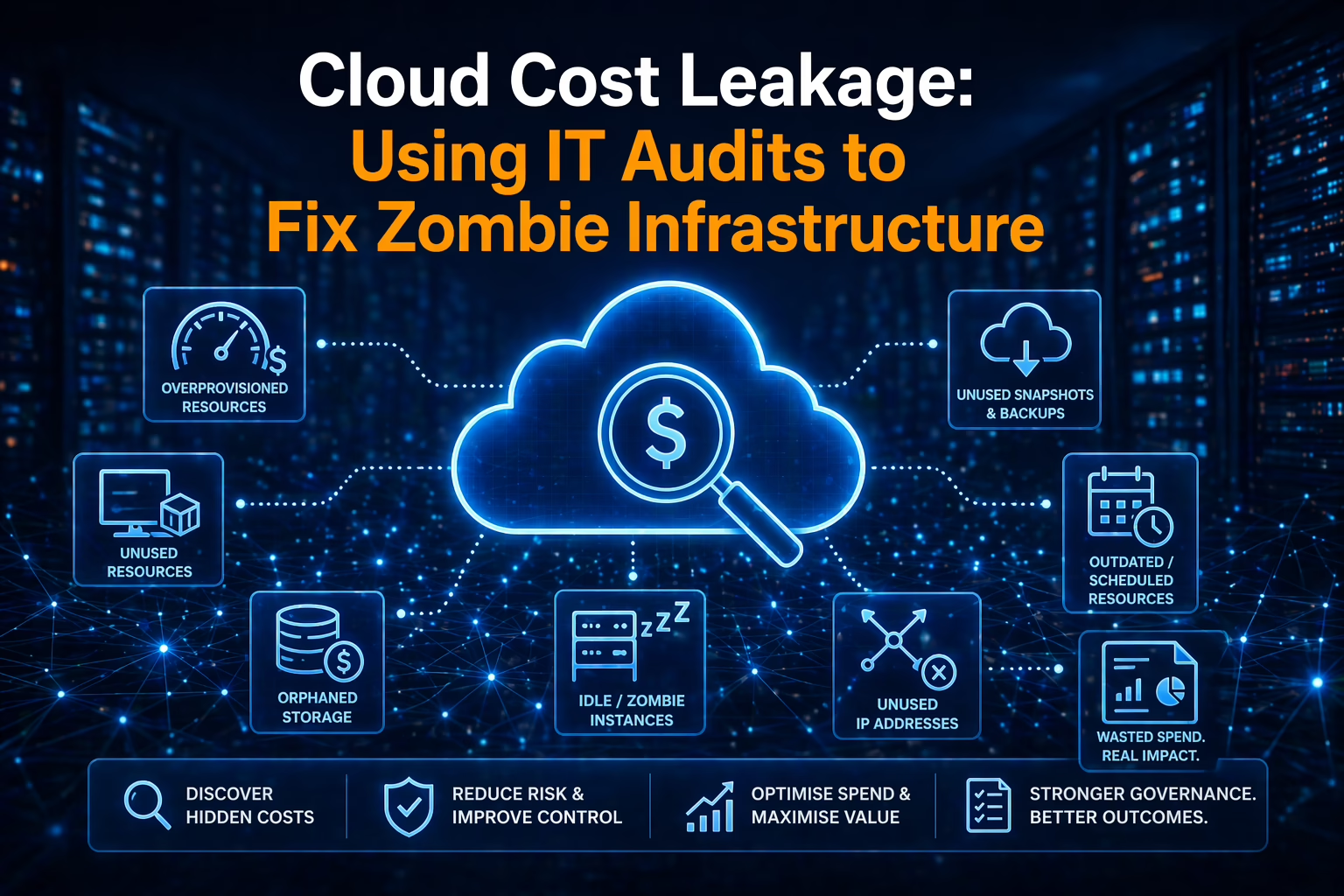
Cloud Cost Leakage: Using IT Audits to Fix Zombie Infrastructure
Cloud platforms promised flexibility, scalability, and faster delivery. For many organisations, they delivered exactly that...
Read more IT AuditMar 09 , 2026
Beyond the Office: Auditing Hybrid Work Security 4.0
Hybrid Work Is Permanent - Emergency Controls Are Not Hybrid work is no longer a..
Read more